The short answer
- Dermaplaning uses a fine blade to gently remove dead skin and soft facial hair (vellus hair or “peach fuzz”).
- Microdermabrasion uses a device to exfoliate and lift away dead skin cells with light suction.
- Dermaplaning is often chosen for smooth makeup application and peach fuzz. Microdermabrasion is often chosen for dull or congested-looking skin.
- Both can help skin look smoother and brighter. Neither is suitable over active breakouts or irritated skin.
The short answer
Choose dermaplaning if your main goal is removing peach fuzz and getting a smooth base for makeup. Choose microdermabrasion if your main goal is freshening up dull, rough or congested-looking skin. Both are exfoliating treatments with little or no downtime, and your therapist can help you decide at your appointment.
The two treatments overlap more than people expect. Both remove built-up dead skin, both can help skin look brighter, and both are usually done as a series rather than a one-off. The differences are in how they feel, whether peach fuzz is removed and which skin concerns they suit best. Here is a quick comparison.
- Method: dermaplaning uses a fine blade; microdermabrasion uses an abrasive tip with suction
- Peach fuzz: dermaplaning removes it; microdermabrasion does not
- Feel: dermaplaning is a light scraping sensation; microdermabrasion is a gentle sanding and suction feeling
- Best for: smooth makeup base and peach fuzz (dermaplaning); dull or congested-looking skin (microdermabrasion)
- Downtime: usually none for either, with possible mild redness
- Frequency: usually several weeks apart for either, as advised by your therapist
How dermaplaning works
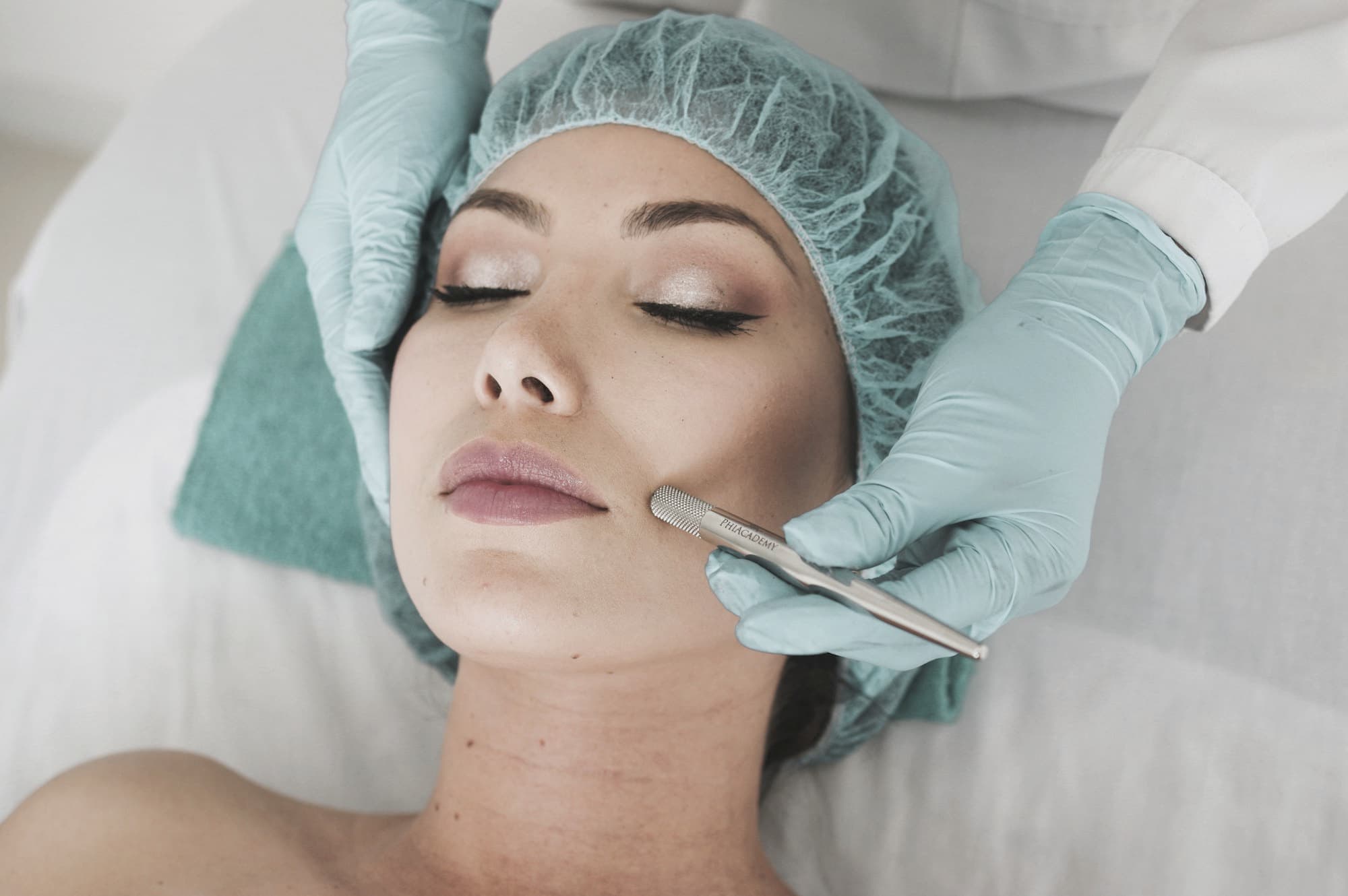
Dermaplaning is a manual exfoliation. A trained therapist holds a sterile, fine blade at a shallow angle and uses short, gentle strokes to remove the outermost layer of dead skin cells and the fine vellus hair on the face.
Skin often looks smoother straight away, and makeup tends to sit more evenly. Vellus hair grows back in its usual way. Dermaplaning does not make hair grow back thicker or darker, which is a common worry. Read more on our dermaplaning page.
How microdermabrasion works
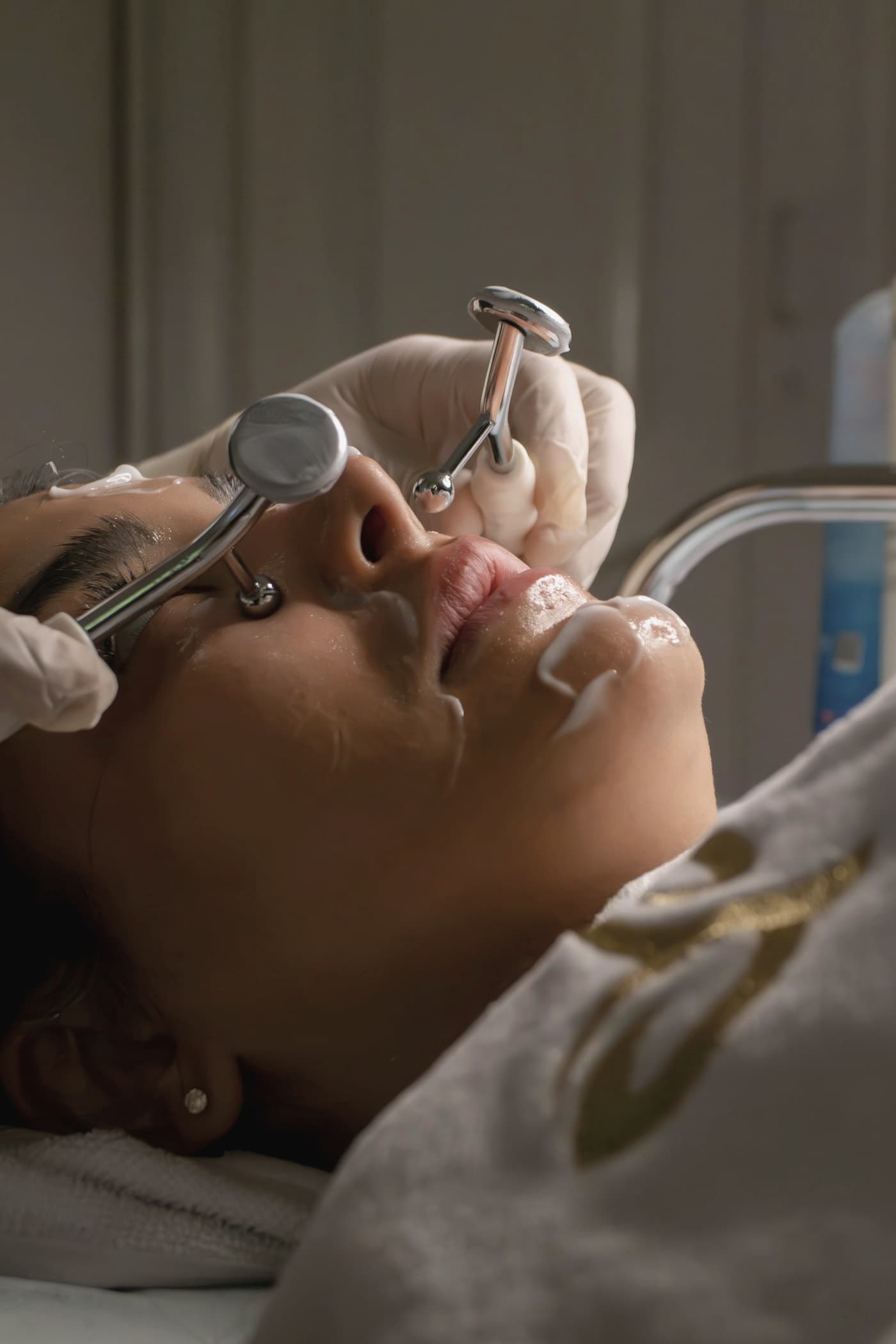
Microdermabrasion is a mechanical exfoliation. A device with an abrasive tip, such as a diamond-tipped wand, passes over the skin while gentle suction lifts away loosened dead skin cells.
The suction also gives the skin a mild stimulating feel. Many people choose it when their skin looks flat, rough or congested, and it can help skin look fresher and more even over a series of sessions. Find out more on our microdermabrasion page.
Who should avoid or check first
Neither treatment should be done over active acne breakouts, open wounds, sunburn or irritated skin. If you use prescription retinoids, have recently taken isotretinoin, have a skin condition such as rosacea or eczema, or are prone to cold sores, talk to us before booking and, where appropriate, your GP or dermatologist.
Both treatments make skin a little more sensitive to sun for a few days, so wear SPF 50+ afterwards and avoid heavy exfoliants until your skin settles.
What to expect afterwards
After either treatment, skin usually feels smooth and may look a little pink for a few hours. Most people go straight back to their day. It is normal for skin to feel slightly more sensitive than usual, so a gentle cleanser, a simple moisturiser and sunscreen are all you need.
For the next few days, skip scrubs, retinoids and acids, avoid saunas and heavy sweating on the same day, and keep your hands off your face. If you usually wear makeup, your therapist can advise when to put it back on, often later the same day or the next morning.
- Mild redness for a few hours is common
- Wear SPF 50+ every day
- Pause exfoliating products for a few days
- Call the clinic if redness or irritation lasts longer than expected
Can you combine them?
Some people alternate between dermaplaning and microdermabrasion depending on what their skin needs, but they are not usually done on the same day, as that can over-exfoliate the skin. Either can be followed by LED light therapy or included as part of a facial plan.
If you are not sure, book either one at our Liverpool clinic and your therapist will look at your skin and suggest a plan. We are open 7 days, 9am to 9pm.
Questions
Does dermaplaning make hair grow back thicker?
No. Vellus hair grows back as it was. Cutting a hair doesn’t change the follicle, so it won’t become thicker or darker.
Does microdermabrasion hurt?
Most people describe it as a gentle sanding and suction feeling. It shouldn’t be painful, and the pressure can be adjusted.
Which is better before an event?
Many people choose dermaplaning a few days before an event for a smooth makeup base. Avoid trying any new treatment the day before.
This guide is general information, not medical advice. Everyone’s skin and hair is different. If you have a medical condition, take medication or are pregnant, speak with our team and your healthcare professional before treatment.